

Guest Post By Dr. John Mighton, Founder, JUMP Math
Mathematics is perceived by many kids, and adults, to be a tough subject that often strikes fear in people when they’re asked to multiply by double digits in their heads, solve an equation, or divide by a fraction.
Traditional math teaching methods leave teachers unprepared to manage the individual ability levels of students in math. Struggling students learn to blame themselves, which can have long-lasting impacts on their self-esteem and future career prospects.
Because math methodically builds on itself more than any other subject, missing one concept or even one step in a concept can cause kids to lose their way early on, leading to frustration and often giving up on learning it by as early as Grade 1.
But what the science of learning tells us is that math is a subject that is accessible for virtually every kid to learn well if taught using methods that align with how our brains learn. To achieve success, they just need to be guided to develop the right mindset and have access to evidence-based resources to support them in learning it.


Table of Contents
Building Confidence
Helping kids feel, and ultimately believe, that they belong in math and can learn it is the first and most important step to alleviating the anxiety they may feel about math and empowering them to find their footing. So, building their confidence is a great place to start.
Often children who have already struggled in math have built up resistance to it and are even anxious about doing math. Building up their confidence that they can do math by giving them problems to solve that they can easily do correctly gradually shifts their thinking, developing in them a more positive attitude toward math.
This attitude shift is key. Research has found that kids are most motivated to learn a subject when they’re about 85% successful at doing it and only about 15% struggling with it. This is often called the “Goldilocks Zone” in education – just right. Experiencing success most of the time gives children the fortitude and grit to continue working at the 15% they don’t yet understand.
Helping Kids With Difficulty in Math Thrive: JUMP Math Homeschool Review
Developing Resilience through Productive Independent Struggle
When new math concepts are introduced, all students experience a degree of difficulty in the learning process. Keeping kids in the Goldilocks Zone and using the language of encouragement and possibility with your child is essential for keeping them motivated. When they say, “this is too hard, I’m never going to get this!”
You can say, “That’s ok, you haven’t quite gotten it yet, but you’ll get there. You can do this!” This is so important for helping children to develop a growth mindset and the resilience to keep persevering through the tougher problems they’ll encounter as math becomes more complex. By leveraging productive struggle as a tool, in both independent and collaborative settings, children can progress well and develop confidence in their math abilities that will last a lifetime.
Continuous Review and Intentional Practice
An essential part of learning math is review and practice. With frequent review of prior knowledge and review immediately following each lesson, educators can quickly see and address where children may be missing key pieces of concepts. Once kids have been taught a math concept, it is essential for them to commit this new knowledge to long-term memory by being able to practice it.
Practice, practice, practice is essential, but not in the ‘drill and kill’ sense of the word. Practicing using carefully scaffolded exercises that gradually increase in complexity helps kids to stay in that zone of productive struggle where they feel mostly successful and will push through the more challenging parts of learning.
Evidence-Based Teaching and Learning
Finally, the resources educators use for teaching and learning matters. If you aren’t using evidence-based resources that are grounded in the science of learning (the well-established bodies of cognitive and neuroscience research that study how our brains learn), it’s going to be an uphill battle, unless the students are just naturally gifted at math.
JUMP Math is a proven, evidence-based math program dedicated to empowering every child to learn math and grow their potential by helping them to develop a deep understanding and a love of numeracy. Founded on the belief that all kids can learn math and that learning math can open doors to future opportunities and life success for all children, the program draws on the latest science of learning research and builds upon the best aspects of math programs from around the world.
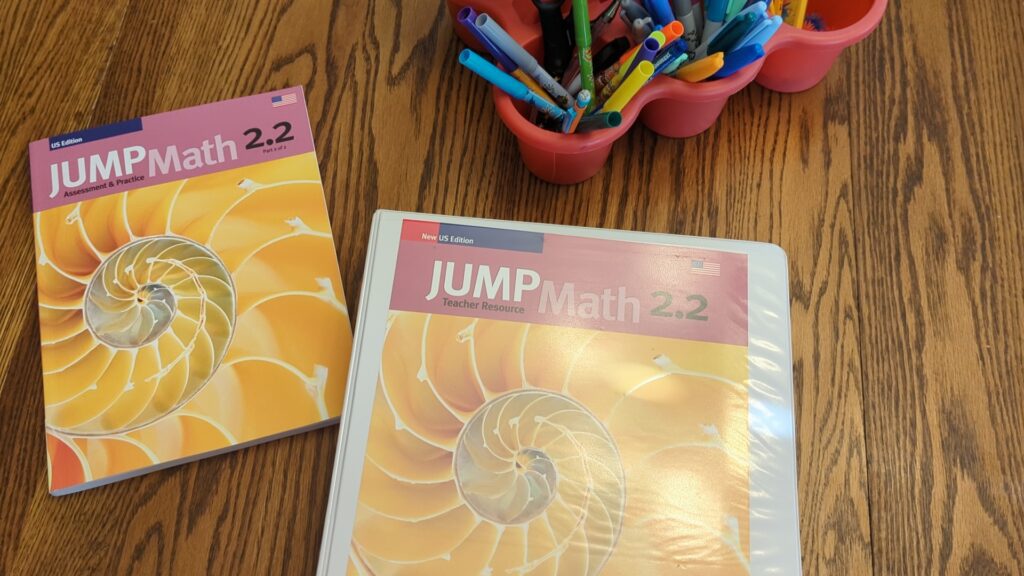
The magic of JUMP Math is that it breaks down complex math concepts into basic, manageable operational steps to help develop children’s self-confidence, understanding, and abilities in math. With this approach, kids can easily see the operations within each concept, gaining an understanding of the ‘why’ behind problems, rather than just rote memorizing the procedural ‘how’ of solving a math problem.
The built-in opportunities for continuous review and practice of concepts as students progress through lessons in each grade, further reinforces learning and allows teachers to quickly address stumbling blocks standing in the way of comprehension.
Developed by expert mathematicians and educators, JUMP Math’s resources are comprehensive and easy to follow for even the most challenged learners. This proven program has been extensively independently researched and originated through the experiences of Dr. John Mighton, an award-winning mathematician, educator and author of three books on math, who created JUMP Math over twenty-three years ago after witnessing his students being discouraged about their capacity for learning math. He subsequently developed an innovative method and curriculum for teaching and learning math to disprove the myth that mathematical talent is a genetic gift that only a privileged few possess.

With a strong understanding of math, children will be able to see the invisible beauty that exists in the world all around them. They will also be able to take advantage of the many academic, career, health, and social benefits that having a firm grasp of math brings to their lives. With evidence-based practices and teaching and learning supports, like those offered by JUMP Math, math and life success is possible to achieve for every child. To learn more about JUMP Math program, visit jumpmath.org.
About the Author:
John Mighton, PhD, O.C. is an internationally recognized, award-winning mathematician, playwright, and best-selling author, who founded the non-profit, JUMP Math in 2002 with an equity-driven mission to empower every child to expand their life opportunities through accessible math education. Based on his experiences tutoring very challenged children to succeed in math, he developed an innovative, evidence-based instructional approach that challenges the belief that only those with natural ability can excel in math. JUMP Math’s Kindergarten to Grade 8 resources currently support thousands of educators and over half-a-million students in Canada, the U.S. and globally to build math confidence, enjoyment, and ability.
Dr. Mighton is a passionate advocate for equitable access to math education, which he believes can transform learning and reverse low student math achievement. He has published three books on the subject and given hundreds of talks, including a TEDx Talk and keynotes at the Perimeter Institute and Aspen Brain Forum. In an interesting twist of fate, early in his career, Dr. Mighton played Matt Damon’s math tutor in the Academy Award winning movie, Good Will Hunting.
For a full overview of Dr. Mighton’s achievements in mathematics education, social entrepreneurism, and the arts, visit johnmighton.ca. To learn more about JUMP Math, visit jumpmath.org.
More Reading: