

If you have ever had a child who is behind in math, you know exactly how discouraging it can feel — for them and for you.
You try curriculum after curriculum.
You scroll and post in Facebook groups looking for answers.
You wonder if you missed something along the way.
Why does homeschooling feel SO HARD?
I’ve been there.
My first daughter repeated Algebra 1 three times with three different programs. My second daughter could not grasp math concepts no matter what we tried — textbooks, online programs, even sending her to a private school just for math instruction.
Nothing worked… until we found a teacher who broke math into tiny, incremental steps that were much smaller than the normal pace of traditional math lessons. That was the breakthrough. She went from failing math to earning straight A’s by graduation. She’s thriving in college now!
That experience changed how I think about math gaps forever.

** This is a sponsored post. I received this product or compensation for review purposes only and was compensated for my time. I was not asked nor required to share a positive review; all opinions are my own. READ DISCLAIMER HERE for more information.
If your child needs to catch up in math, here are five strategies that actually work — and how JUMP Math supports each one.

Table of Contents
1. Identify Gaps Before Pushing Ahead
One of the biggest mistakes we make when a child is behind in math is pushing forward too quickly.
Math builds on itself.
If working memory isn’t solid — the next level collapses.
JUMP Math lessons clearly state:
- The goal of the lesson
- What prior knowledge is required
- What skills need reinforcement
Instead of guessing where the gap is, you can pinpoint it and rebuild.
Catching up starts with clarity.
2. Break Core Concepts Into Smaller Pieces Than “Normal” Curriculum
When my daughter finally succeeded, it wasn’t because she suddenly became “good at math.”
It was because the teacher broke concepts into much smaller steps than typical curriculum offer.
That’s the foundation of JUMP Math.
Dr. John Mighton founded JUMP Math after nearly failing calculus himself and discovering that struggling students thrive when math is broken into incremental stepsF.
Inside each level:
- Major concepts are divided into many small lessons
- Even long division is taught with added visual supports
- Graphics help students see place value and alignment clearly
Instead of overwhelming students, it builds understanding one layer at a time.
Helping Kids With Difficulty in Math Thrive: JUMP Math Homeschool Review

3. Use Scripted Instruction to Rebuild Confidence
When a child is behind, their confidence is usually fragile…and emotions may be running high.
And if we’re honest? Sometimes parent confidence is fragile too. It can be so stressful when your kiddo is stuck!
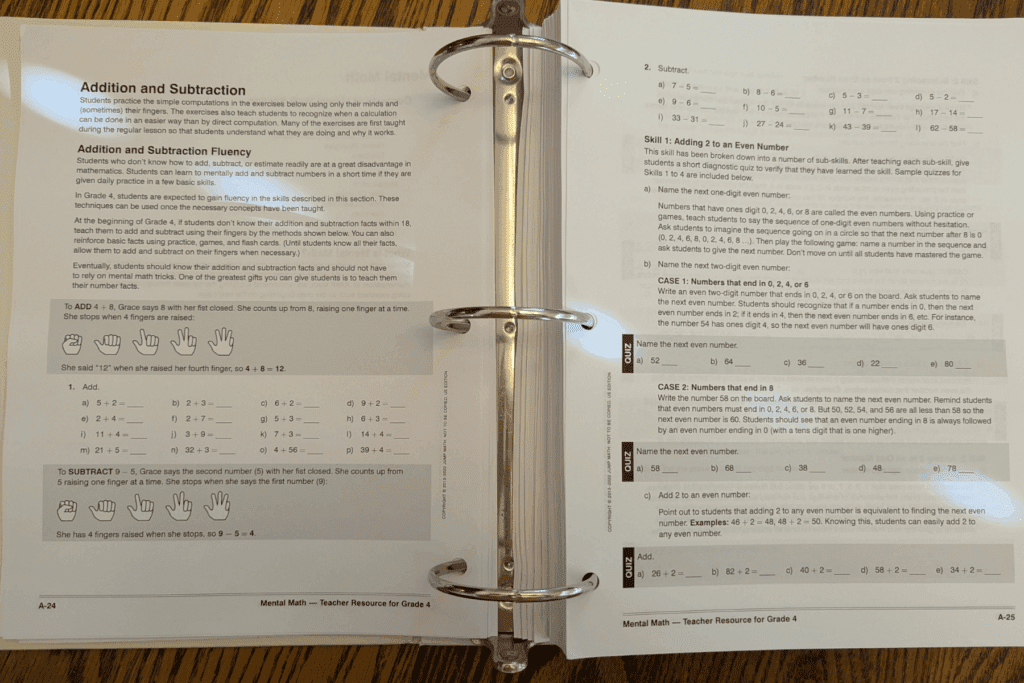
JUMP Math includes a fully scripted teacher’s manual that tells you:
- What to write on a whiteboard
- What questions to ask
- How to guide discussion
- What materials to use
- When to reinforce or skip
You don’t have to be a math expert.
You just follow the structure.
That structure creates consistency — and consistency builds momentum that is needed to finally catch up!
4. Master Before Moving On
You cannot build higher-level math on shaky foundations.
JUMP Math emphasizes mastery before progression. If your child understands the concept during guided teaching, you can move forward. If not, the teacher’s manual includes additional reinforcement pages.
This is critical when catching up. Instead of racing through grade-level expectations, you’re strengthening working memory and true comprehension.
Catching up doesn’t mean speeding up.
It means building solid foundations…understanding core math priniciples that may not be solid for your student.

5. Keep Lessons Short, Guided, and Interactive
When a child is behind in math, long independent workbook sessions usually make things worse.
JUMP Math is designed as a parent-child experience:
- Short scripted lesson
- Guided discovery
- Quick interactive activity
- Independent workbook practice
Most students can complete the workbook page independently after the lesson — which restores that feeling of “I can do this.”
The combination of short lessons and quick wins leads to improved math confidence!

What Do You Actually Get?
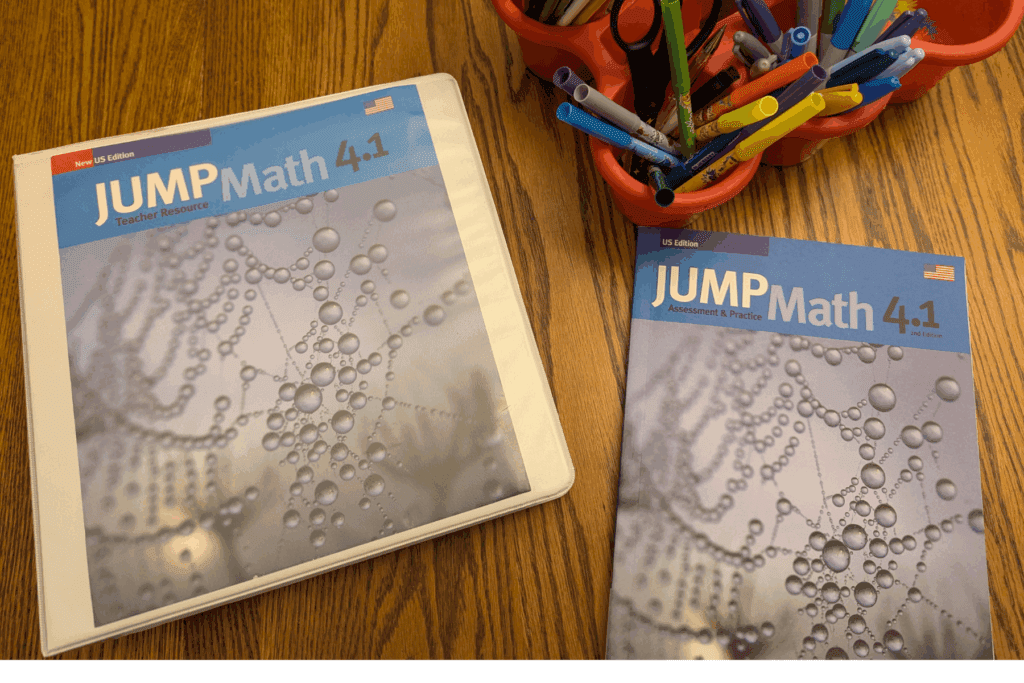
Each level includes:
- Two student workbooks (for example, 4.1 and 4.2)
- Two teacher manuals
- Structured, incremental lessons
- Extra reinforcement worksheets
- Optional digital memberships with quizzes, pacing guides, and assessments
It’s thorough. It’s structured. It’s designed to close gaps.
Can You Really Catch Up in Math?
Yes!!
We have done with different kids several times.
I watched my daughter move from years of frustration to full confidence. That didn’t happen because she changed….or suddenly understood math!
The structure changed...and the missing puzzle pieces were identified. Those changes helped her finally understand math!
If your homeschooler is behind in math, catching up may not mean more lessons…more flash cards…more of what isn’t working. It’s about strategy.
When math concepts are broken into small, manageable pieces — and guided step by step — nearly every child can rebuild and finally learn math!
And sometimes, they even start to enjoy it!
👉 You can try JUMP Math for free through their parent resource center
👉 And use coupon code SMcCub10 to save 10%.
If math gaps have been weighing on your homeschool, maybe it’s time to rebuild — one small step at a time.

Sarah McCubbin and her husband and 9 kids live in Ohio. She loves talking about all kinds of education topics and is passionate about helping families find the best education options in each season! After being very socially awkward growing up, she now loves to help families teach life skills, social skills and leadership to their kids!
Connect With Sarah:
Schooling Year By Year Facebook Group
Facebook Page / Instagram @ten_minute_momentum
IndieEducationNetwork.com
More Reading: