

Are you wondering if a personal finance course is needed or if its just checking another box? Imagine your teen is about to get their first job, open their first bank account, or decide whether to take out student loans. Are they ready?
For some odd reason, there are some topics we just assume our kids are going to naturally pick up. While we often teach core subjects like math, language arts and science, we often miss teaching the practical skills with step by step life skills.
And while people may debate about whether your teen will ever need to diagram a sentence, everyone agrees that our young people will handle money (hopefully a lot of it) in the future!
Shockingly, less than half of U.S. states require a personal finance class to graduate, and studies show many young adults leave home without even basic money management skills.
That raises the big question: Should teens take a personal finance class in high school? Should it be required?

** This is a sponsored post. I received this product or compensation for review purposes only and was compensated for my time. I was not asked nor required to share a positive review; all opinions are my own. READ DISCLAIMER HERE for more information.
My husband and I both had frugal parents growing up. But there were many elements of making financial decisions that we did not understand. As a result we both spent 4 years getting useless college degrees. That decision alone cost us greatly. On top of that we really had no idea how much it cost to live independently, pay bills, set aside extra for emergencies and the like.
As a result we determined when our kids were quite young that it would be a top priority for us for our kids to take steps to earn money and then apply financial education to that money as early as possible. Most of our teens have gotten jobs at 14 years old and begun the process early of learning how to handle money. Of course there have been plenty of mistakes….but the mistakes are less costly when all your main expenses are covered!

Table of Contents
What Is a Personal Finance Course
A quality personal finance course is about systematically equipping teens to handle real-world money challenges. The very best ones teach financial topics in an order that moves from simple to complex…from most relevant to decisions made in the future.
Most personal finance courses cover topics like:
- Budgeting and saving
- Banking and credit cards
- Taxes and paychecks
- Insurance and investments
- Student loans, mortgages, and other major financial decisions
Obviously some of those topics are very relevant to a teen but some seem so distant in the future. It can be hard to connect the dots ten, twenty or thirty years into their future! That is why it is very important that courses start with topics that mean something to teens right now!

Is Personal Finance Really Needed?
There are three big reasons why every teen needs this kind of education as direct instruction and not just as something they pick up here and there:
- Financial literacy is a life skill. Teens will soon be making decisions about college loans, credit cards, and jobs. A personal finance class prepares them to make smart choices.
- It builds independence and confidence. Instead of feeling overwhelmed by bills and bank statements, teens leave equipped to manage their money.
- It prevents costly mistakes. One bad loan or missed credit card payment can take years to undo.
A well-designed curriculum delivers instruction in an order that makes sense so teens can start applying what they learn right away. They get excited about what they are learning because they can take it and use it today!
Use Beyond Personal Finance for Financial Education Your Teen Can Use Today
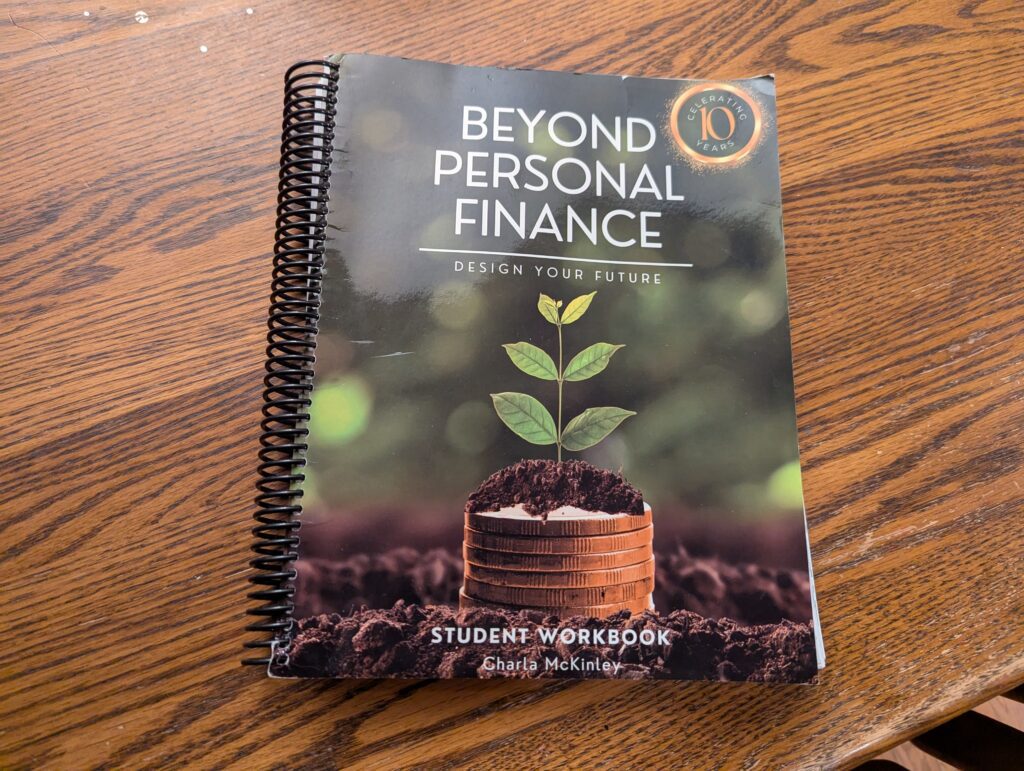
If you want a personal finance course that doesn’t just teach theory but gives your teen real-world skills they can start using immediately, Beyond Personal Finance is an excellent choice. This interactive curriculum uses videos and a textbook to keep students engaged. It helps teens “step into their future” and see how the decisions they make now affect their adult life.
Highlights of Beyond Personal Finance:
- Students “fast-forward” to adulthood and make choices about jobs, housing, cars, and family life.
- Each decision impacts their personal budget, helping them experience the real consequences of financial choices.
- Covers essential topics like budgeting, saving, investing, loans, credit cards, and insurance.
- Flexible options for homeschoolers, co-ops, or traditional classrooms.
- Engaging format that keeps teens interested and motivated to learn.
By the end of the course, teens have a clear picture of how to set themselves up for financial success—and the motivation to start making smart decisions now.
The Transformation I Saw in My Son With Beyond Personal Finance
After using Beyond Personal Finance, I saw huge growth in my son. He set five-year goals, opened an investment account, and began actively investing. He also pursued extra jobs and started talking about potential career paths.
Because of this course, we had meaningful conversations about how the decisions he’s making now at 15 years old could affect him five and ten years down the road. It was powerful for him to realize that the choices he’s making today could set his future family up for success.
As a parent, I love watching young people become motivated and take initiative on their own. This course was a huge part of helping my son mature in his thinking over the past school year.

Who Is This Course Perfect For?
Beyond Personal Finance is perfect for high school teens of all abilities although it may under challenge some students who enjoy rigorous courses.
- It works well for families looking for neutral or secular content.
- Teens who are ready to apply financial knowledge.
- Teens who are ready to do the work and not just listen.
- Great for students who may have some learning or reading delays as it is mostly video with limited workbook activities.
- Perfect for students who are easily overwhelmed as content is delivered in small chunks.
- Great for students who might struggle with math. There are problems in the course but they are not exceptionally difficult.
My teens have used several different personal finance courses over the years and I think this one is the most accessible I’ve seen. So if you have a student who is easily overwhelmed, this would be a great fit for them too!

It’s Never Too Early To Begin With A Money Education
While most Personal Finance courses begin in high school or later, one of the things I like about this company is that they offer a curriculum you can use with younger students too. In Before Personal Finance, students get to begin learning about money at just 8 to 12 years old. This would be a great class to offer in a homeschool co-op where students are learning and talking about finances in a class setting!
Whether you have a teen of a younger student, the reality is, the right time to start teaching kids about finances is now. It’s never to late and it’s never too early to start having conversations, explaining how money is earned, saved and invested and letting kids earn some of their own money so they can learn how to use it well!

Sarah McCubbin and her husband and 9 kids live in Ohio. She loves talking about all kinds of education topics and is passionate about helping families find the best education options in each season! After being very socially awkward growing up, she now loves to help families teach life skills, social skills and leadership to their kids!
Connect With Sarah:
Schooling Year By Year Facebook Group
Facebook Page / Instagram @ten_minute_momentum
IndieEducationNetwork.com
More Reading: