

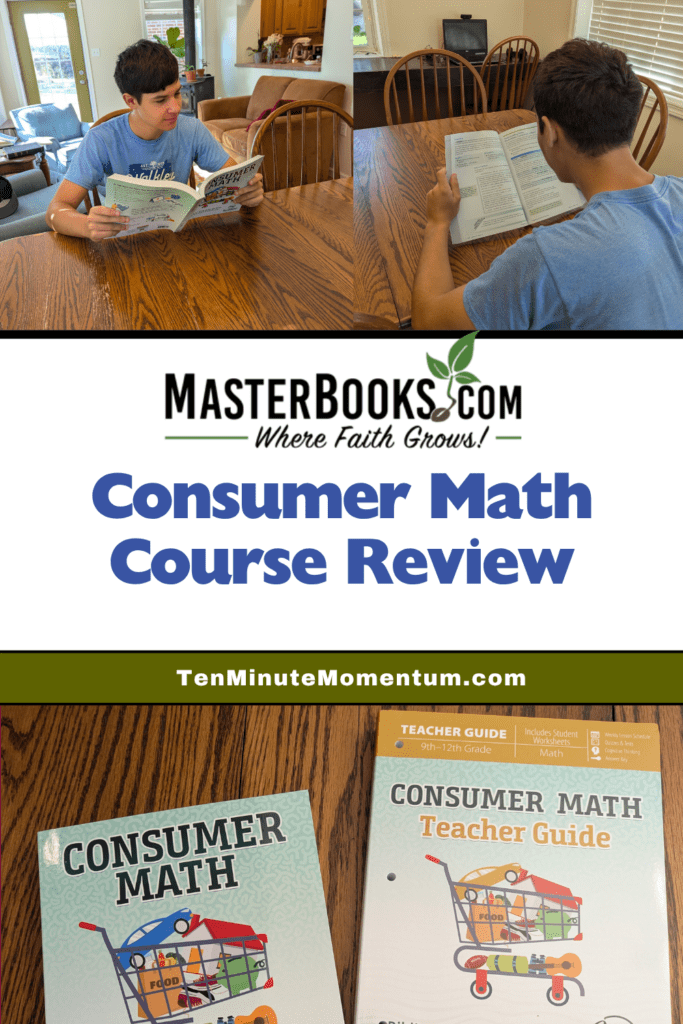
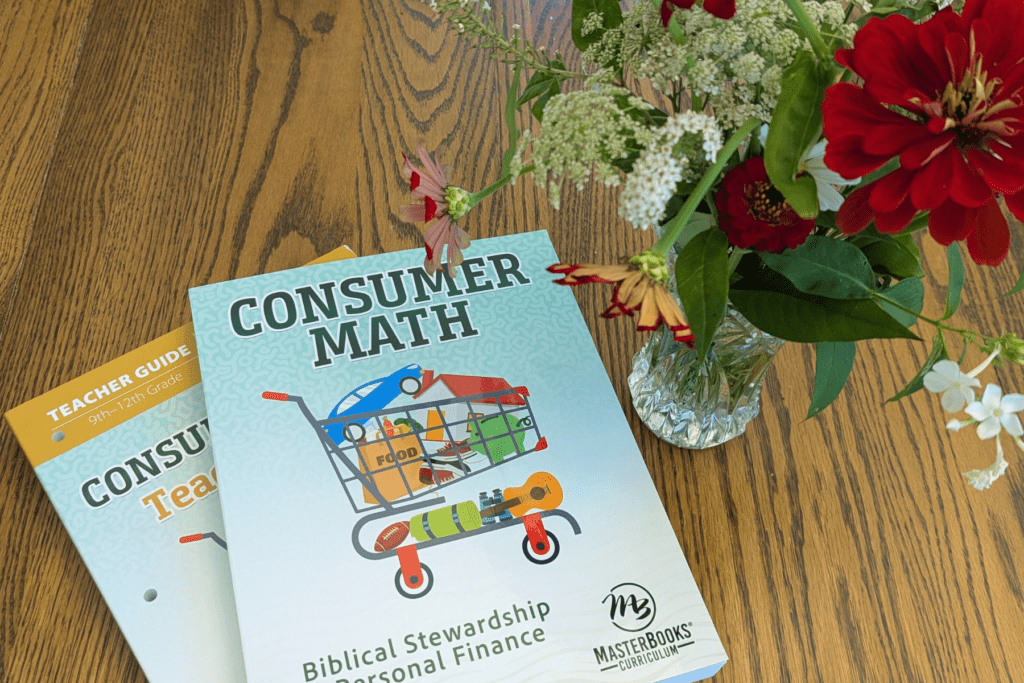
The Consumer Math: Biblical Stewardship & Personal Finance course from Master Books offers high school students a hands on practical approach to handing finances preparing them for adulthood.
Beyond managing money though—it’s about wisdom, stewardship, and helping teens see how financial decisions connect to real life and their walk with God.
When I was a teen, personal finance meant learning how to write a check and maybe glancing at a budget sheet—but no one talked about how to actually prepare for real life.
My husband and I got married young, still in college, and we were completely unprepared for the weight of financial responsibility. Rent, car repairs, insurance… I had no clue what anything cost. And while we were both raised in frugal homes, we still made financial mistakes simply because we didn’t know what we didn’t know.
** This is a sponsored post. I received this product or compensation for review purposes only and was compensated for my time. I was not asked nor required to share a positive review; all opinions are my own. READ DISCLAIMER HERE for more information.
So when it came to our own kids, we wanted a better plan. We began teaching them financial responsibility in steps, not all at once when they turned 20. That meant real conversations, real budgeting, and slowly increasing responsibility as they earned and managed their own money.
And now with 4 adult children out of our 9, I can see that teaching personal finance has been a total game changer. From paying for their own college, cars and weddings to saving for houses, starting businesses and planning for the future, helping our kids plan their finances years ahead of time has been a very wise investment.
That’s why I was excited to review Consumer Math from Master Books—because it mirrors that approach. It walks students through giving, saving, spending, taxes, career decisions, buying a car, housing, retirement, business, and more—not just from a math lens, but from a biblical one.
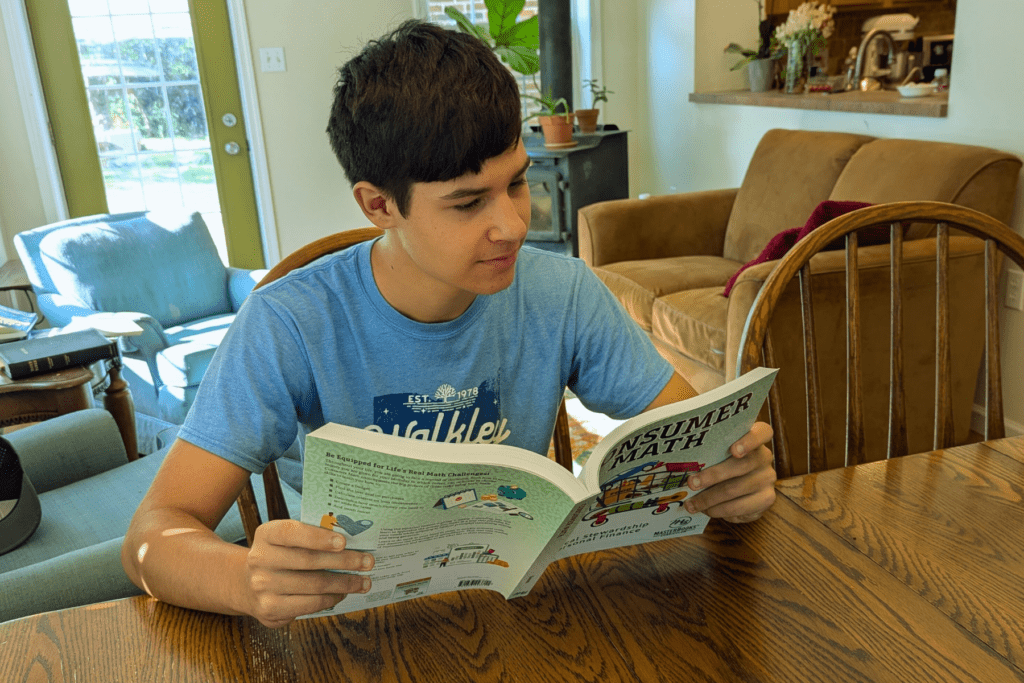
Table of Contents
Consumer Math Personal Finance Course Overview
This full-year course is designed for grades 9–12 and fulfills one high school math credit. Students complete five 45-minute lessons per week using a full-color student text and teacher guide, with optional online video instruction available soon through MasterBooksAcademy.com.
The Course Is Divided into Four Quarters:
- Quarter 1: Giving, Living Expenses, Debt & Taxes
- Quarter 2: Budgeting for Essentials & Big Expenses
- Quarter 3: Major Financial Decisions—Cars, Careers, Housing
- Quarter 4: Investing, Retirement, Business Math & Review
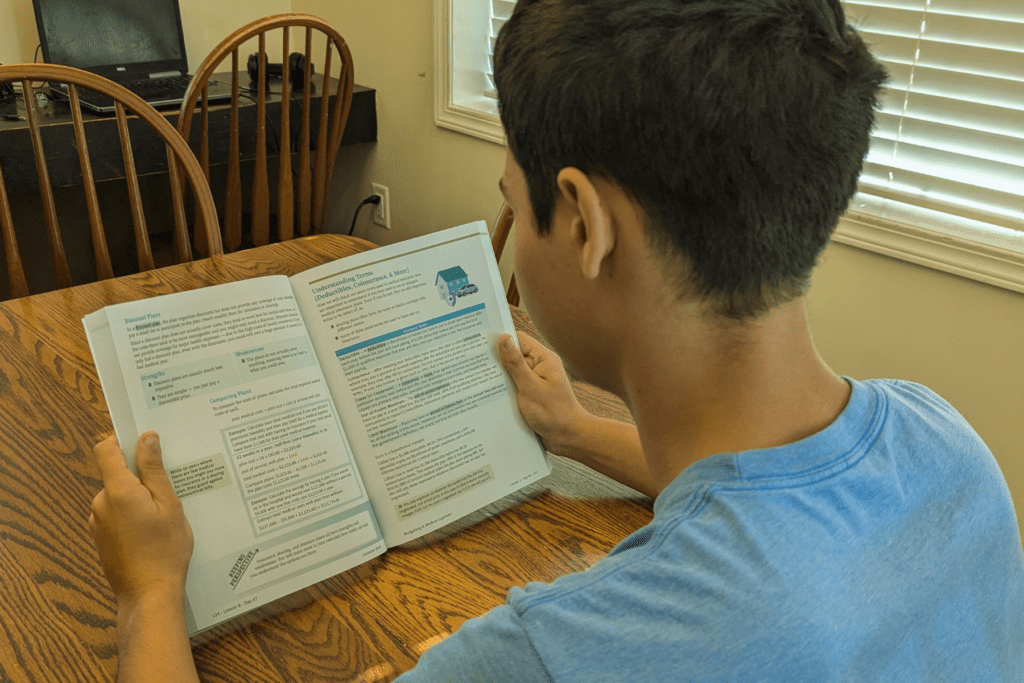
Each unit builds on the last, starting with a biblical view of stewardship and expanding into practical, real-life math topics. It covers everything from interest and budgeting to housing and insurance—with plenty of time for discussion, spiritual application, and skill-building.
The course includes both a Teachers Manual and Student Textbook. Unless it is being used in a classroom, I would say families should plan to purchase both books. The Teacher’s Manual has all of the student pages for homework, texts, answers keys and more.
Optional Extra: If you have a student who prefers video instruction, Master Books Academy offers supplemental video instruction available separately. I did not use this portion of the course but you can check it out here if it sounds like this would help your student!

What I Loved as a Mom
1. It’s not just math. It’s discipleship.
Right from the first lesson, Consumer Math students are taught that everything belongs to God, and we are stewards, not owners. That’s a powerful foundation to lay before diving into compound interest or budgeting categories. At the end of the day, the finances in our bank accounts belong to God and it is such a valuable perspective for young people to understand that in giving, saving, earning and spending, they should do so unto the Lord.
2. Real-world readiness.
From evaluating housing and job options to estimating medical costs and planning for retirement, this course prepares students for the decisions they’ll make in just a few years—or sooner. It even walks them through spreadsheets and online payment tools. In our house, our teens start jobs around age 14 and begin using their money to work toward current and future goals. This course prepares them to think about their future and use their money wisely.
3. Built-in conversation starters.
Lessons include Scripture reflections, real-life case studies, and thoughtful application questions. Over and over, we have seen our kids take what they learn in their Consumer Math course and incorporate it into real life. So much of education is just theory. We learn history, science and math that we “might” not use regularly as adults, but lessons on handling money will absolutely be used in the future. This is the kind of meaningful, practical education we want for each one of our kids.
4. Student-friendly design.
The full-color pages and clean layout make it accessible for visual learners. The content is chunked in a way that helps teens focus—especially helpful for students with ADHD or attention struggles.
5. Faith integration done well.
This isn’t a secular course with a Bible verse sprinkled in. It’s rooted in biblical wisdom—generosity, honesty, diligence, contentment, stewardship—and it doesn’t shy away from talking about the temptations and pitfalls of money.
This Course Provides What Works In Real Life
Here is the thing, the method and content in this course works. I know it because we have used a very similar approach for YEARS with our older children. When THEY were teens we systematically taught them about finances. Our method looked something like this:
- Get a job
- Start paying for immediate expenses – phone, clothes, extra fun things
- Talk about goals and future expenses
- Intentionally learn about finances (earning, saving, investing, debt, taxes etc)
- Apply that knowledge with future earnings
- Become independent and self-supporting responsible adults.
This works…teaching your teens about personal finance as well as APPLYING that knowledge in real life makes ALL the difference in their confidence and experience.
Who Is This Consumer Math Course Perfect For?
This course is a great fit for a wide range of students—but especially for those who benefit from real-world application and a biblical lens on life’s big decisions. Here’s who will thrive with Consumer Math: Biblical Stewardship & Personal Finance:
- Teens in Grades 9–12 who have completed Pre-Algebra and are ready to learn how math applies to real life
- Students who are ready to “do the work.” This class is most valuable to students who take the time to do and apply the assignments.
- Students who struggle with abstract math but excel when they can see the purpose behind what they’re learning
- Independent learners who appreciate structure, visual layout, and optional video lessons for self-paced study
- Visual learners or ADHD students who benefit from full-color pages, one-concept-at-a-time lessons, and space for reflection
- Christian families who want to train their teens in wise financial stewardship from a biblical worldview
- Homeschool co-ops or small groups looking for a solid, discussion-friendly curriculum to use in a classroom or group setting
- Parents of working teens who want to build good money habits now—before the first car loan or credit card offer appears
Whether your student is preparing for college, trade school, entrepreneurship, or adult life at home, this course gives them the tools and mindset to manage money with clarity and conviction.
From One Mom to Another
If you’ve got a teen who is working their first job, saving for a car, thinking about college, or just needs to learn how money works in the real world, this course is a fantastic fit. It’s also ideal for homeschool groups and co-ops (the layout and built-in structure make it easy to teach in a group setting).
The high school years are essentially a 4-year runway to adulthood where we are preparing them step by step to launch. Many parents are afraid to talk to their kids about hard things because they made their own mistakes (um…we did too!) or because they don’t want to put too much pressure on their kids.
Transparently, mistakes you made can be the greatest tool you have to build trust with your teens when talking about anything. And avoiding the pressures of adulthood will not prepare teens for life. It is much better to let them learn and practice incrementally and this Consumer Math course provides a great foundation for that.
Prepare Your Teens For Life With Consumer Math
Consumer Math: Biblical Stewardship & Personal Finance is a solid, life-giving course. It teaches the “how” of money while never losing sight of the “why.” In a world where debt is normal and money is often idolized, this course offers students a better path—one rooted in truth, wisdom, and freedom.If you want your student to leave high school confident in their ability to manage money and committed to honoring God with what they’ve been given—this is the course for you!

Sarah McCubbin and her husband and 9 kids live in Ohio. She loves talking about all kinds of education topics and is passionate about helping families find the best education options in each season! After being very socially awkward growing up, she now loves to help families teach life skills, social skills and leadership to their kids!
Connect With Sarah:
Schooling Year By Year Facebook Group
Facebook Page / Instagram @ten_minute_momentum
IndieEducationNetwork.com
More Reading: